Wireless IoT Connectivity Smart Connectivity for IoT Services
In the realm of Internet of Things (IoT) connectivity, 4G and 5G symbolize two distinct eras, every providing distinctive features that cater to various software calls for. One of essentially the most important variations lies in the speed of knowledge transmission. 5G know-how boasts incredibly high knowledge rates, often reaching as much as 10 Gbps in ideal situations. In distinction, 4G networks often deliver speeds around 100 Mbps to 1 Gbps, which can be limiting for sure IoT functions that require fast knowledge trade.
Latency is another critical differentiator. 5G networks promise ultra-low latency, typically in the vary of 1 millisecond. This is a drastic enchancment over 4G, which has a latency vary of 30 to 50 milliseconds. For purposes such as autonomous vehicles or remote surgery, the place real-time information switch is important, the low latency of 5G is invaluable.
The number of gadgets that can be related to a network also diverges significantly between 4G and 5G. 4G can assist round 2,000 units per square kilometer (IoT Connectivity Provider). However, 5G know-how can accommodate up to one million gadgets in the same space. This functionality is vital because the number of related IoT gadgets continues to surge, necessitating a network that can effectively manage the elevated demand.
Web Connectivity In IoT SIM Card Solutions for IoT Connectivity
Energy efficiency is one other area where 5G holds a bonus. IoT gadgets powered by 5G can function at decrease energy levels, extending battery life and lowering costs associated to energy consumption. While 4G networks are fairly efficient, the developments in 5G know-how enable extra optimized information transmission strategies fitted to battery-operated devices.
The architecture of 5G networks additionally differs from that of 4G. 5G employs a extra versatile, software-defined community mannequin that allows for network slicing. This means specific portions of the community can be tailored to meet the requirements of varied purposes, whether they demand high velocity, low latency, or expansive coverage. In contrast, 4G networks typically offer a one-size-fits-all approach, which limits their adaptability.

Security is a paramount concern in IoT connectivity, and 5G networks are designed with enhanced security protocols. This contains improved encryption and authentication mechanisms, which protect information as it travels between devices and servers. While 4G does supply some level of security, the developments in 5G provide a extra strong framework to safeguard sensitive info in an increasingly interconnected world.
Coverage space is another space of distinction. While 4G networks have established broad protection, 5G networks are nonetheless being deployed and may have much less extensive attain in certain geographic areas. However, the evolution of 5G is expected to quickly increase coverage over time - IoT Connectivity Issues. Additionally, 5G's capability to work extra successfully in dense city areas signifies its potential to alleviate community congestion.
IoT Connectivity Plan Enhancing IoT Connectivity and Security
Interference management additionally showcases variations between the two technologies. 5G employs advanced technologies like beamforming, which directs alerts toward specific devices rather than broadcasting them broadly. This other results in higher sign energy and quality, especially in crowded environments. Conversely, 4G's broader broadcasting can sometimes battle in densely populated areas, resulting in sign interference.
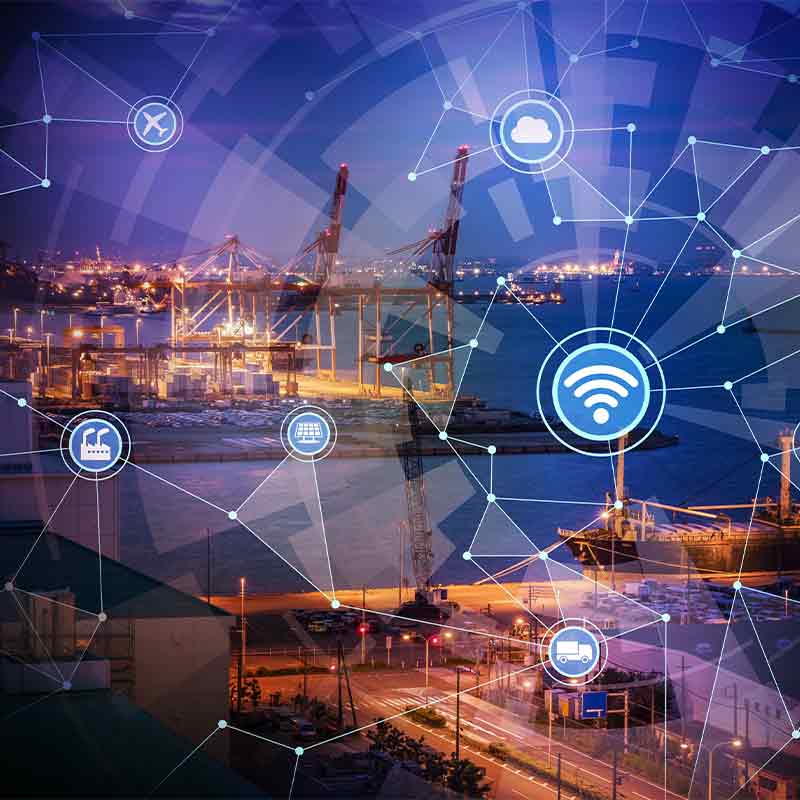
The kinds of functions fitted to 4G versus 5G networks additional illustrate their differences. 4G is sufficient for typical mobile functions like streaming videos or social media. In distinction, 5G is extra suited for complicated, low-latency duties, similar to telemedicine, distant monitoring in healthcare, and smart cities, where real-time knowledge processing is important.
Cost implications additionally differ between 4G and 5G implementations. While 4G networks have been established for years and the infrastructure prices are relatively steady, the initial investment for 5G expertise can be significantly larger. These prices are associated with new base stations, hardware, and the transition period required for network upgrades. However, the long-term advantages of 5G, corresponding to operational efficiency and enhanced capabilities, might justify these preliminary expenses.
IoT Connectivity Provider Definition of Internet of Things
When looking into future potential, 5G networks are designed with scalability in mind. This progress functionality stands in stark distinction to 4G, which can face limitations because the number of connected devices skyrockets. The flexible and adaptive nature of 5G suggests that it could accommodate innovative purposes arising from developments in AI and machine studying, paving the way for a extra interconnected ecosystem.
In conclusion, the differences between 4G and 5G IoT connectivity are profound. From pace and latency to scalability and energy efficiency, every know-how caters to distinct needs inside an ever-growing digital landscape. While 4G has been a stable foundation for IoT functions, the enhanced capabilities of 5G technology are set to revolutionize how gadgets communicate, making it an essential participant in the way ahead for connectivity. Recognizing these differences may help businesses and developers Go Here strategically method their IoT deployments, making certain they leverage the appropriate know-how to meet their goals.
- 5G IoT connectivity provides considerably higher information transfer charges compared to 4G, enabling faster communication for gadgets.
- The latency in 5G is drastically reduced, permitting for near real-time knowledge exchange, which is crucial for functions like autonomous vehicles.
- 4G networks have restricted device density capabilities, while 5G can assist tens of millions of devices per sq. kilometer, enhancing scalability for IoT options.
- 5G employs advanced technologies corresponding to beamforming and network slicing, which optimize network efficiency for specific IoT purposes.
- The energy efficiency in 5G networks is improved, facilitating longer battery life for IoT units, which is important for remote and cell usage.
- 4G primarily focuses on cellular broadband, whereas 5G permits enhanced machine-type communications, catering particularly to IoT wants.
- 5G supplies enhanced reliability and security features, which are important for important IoT applications in healthcare and industrial automation.
- The architecture of 5G allows for edge computing, minimizing information latency by processing information closer to where it's generated, unlike 4G.
- 4G networks face congestion issues with elevated customers, whereas 5G’s advanced infrastructure mitigates this drawback, offering higher consumer expertise.
- 5G’s flexibility in deployment and assist for diverse use cases makes it more adept at adapting to numerous IoT environments in comparison with 4G.undefinedWhat are the primary technological differences between 4G and 5G for IoT connectivity?undefined4G know-how depends on LTE structure and primarily focuses on cell broadband. In contrast, 5G is designed for greater effectivity with decrease latency, enhanced capability, and improved reliability, enabling a larger number of units to connect simultaneously.
IoT Connectivity Comparison Management of IoT Connectivity
How does the latency differ between 4G and 5G?undefinedLatency in 4G networks typically ranges from 30 to 50 milliseconds, whereas 5G latency may be decreased to as low as 1 millisecond. This decreased latency enhances real-time responsiveness for IoT functions like autonomous automobiles and remote medical procedures.
What is the difference in network capacity between 4G and 5G?undefined4G networks can support thousands of linked gadgets per sq. kilometer. 5G considerably increases this capacity, accommodating up to one million devices per sq. kilometer, making it perfect for densely populated areas and quite a few IoT purposes. IoT Connectivity Management Platform.
How do energy efficiency ranges evaluate between 4G and 5G for IoT devices?undefined5G know-how improves energy efficiency due to its advanced options like network slicing and energy-saving sleep modes. This permits IoT devices to function longer on battery with out compromising performance, which is essential for remote sensors and units within the subject.
Can 5G assist extra IoT applications than 4G?undefinedYes, 5G's enhanced speed, capacity, and lower latency allow it to support diverse IoT applications that require real-time data processing, such as smart cities, industrial automation, and related healthcare, all of which can be difficult on 4G.
Internet Connectivity In IoT Market for IoT Connectivity Management Platforms
What are the implications of these variations for businesses using IoT?undefinedBusinesses leveraging IoT can anticipate increased efficiency and better efficiency with 5G because of its ability to support a bigger variety of devices and applications, resulting in improved operational capabilities, lowered costs, and enhanced customer experiences.
Will transitioning from 4G to 5G be necessary for IoT devices?undefinedWhile 4G will proceed to function for the foreseeable future, the transition to 5G will present vital benefits. Businesses and industries aiming for prime efficiency and scalability in their IoT functions ought to consider upgrading when feasible.
IoT Sim Connectivity Survey on IoT Connectivity Technologies and Applications
How does 5G enhance safety for IoT units compared to 4G?undefined5G networks incorporate superior security protocols and built-in encryption strategies, enhancing data integrity and confidentiality. This heightened safety is essential because the number of related IoT devices continues to grow, mitigating potential vulnerabilities.
What is the fee influence of adopting 5G for IoT connectivity compared to 4G?undefinedWhile the initial setup and infrastructure prices for 5G can be greater, the long-term advantages include enhanced efficiency, reduced operational costs, and doubtlessly lower maintenance prices. Businesses may find that the funding pays off through improved efficiency and new income opportunities.
Comments on “Mobile Data Connectivity For IoT Market for IoT Connectivity Management Platforms”